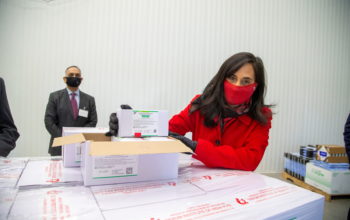

Chrystia Freeland, the Minister of Finance, delivered the 2020 fiscal update on Parliament Hill in Ottawa’s House of Commons on November 30, 2020. Among other things, she announced first steps in a multi-year publicly-subsidized plan that will build a child care system throughout Canada that will increase the affordability for parents and encourage more women with children to return to or enter the workforce. Many women had to reluctantly leave the workforce when the pandemic forced the closings of day cares and schools last spring, and many have not been able to return to work.
Freeland said in her speech that Canada will not really be competitive until women have access to child care that is affordable. Current federal child care spending expires near the end of this decade, but Liberals propose to continue the money, starting in 2028 with $870 million annually. As a beginning, the Liberals have proposed to allocate $420 million in bursaries and grants to help the territories and provinces retain and train qualified early-childhood educators.
New System Needed
Freeland also said that the government needs to create a new national secretariat on child care and early learning and work with the provinces and territories in the design of a new system. It can be modeled on the one already in Quebec, where parents have child care access for under $10 a day.
Millions of dollars have been proposed by the federal government for new spending and as a down payment on that national child-care system, and it will hopefully be outlined in the 2021 spring budget. The money would lay the foundation and be a promise of big money in that coming budget. Many corporate leaders say that it is sound business sense to spend that money and has their backing.
Other Promoting Groups
The Canadian Chamber of Commerce has also promoted a long-term child care plan as an economic necessity. Chamber president Perrin Beatty stated that the rate that women have been forced to leave employment because of a lack of child-care undermines the nation’s economic recovery and needs emergency funding.
The Centre for Future Work estimates that governments could make between $18 billion dollars and $30 billion dollars each year in new revenues if more parents are able to go to work. An estimate from Scotiabank suggested that creating what Quebec has already done would be an expense of $11.5 billion annually. Various groups have proposed an extra $2 billion in funding for child-care in the budget for next year’s and an additional $2 billion in each subsequent year.
Freeland’s New Role
Ms. Freeland, 52, took over the role of finance minister in August and is the first woman to hold the position. Additionally, she serves as the deputy prime minister. Even before the pandemic, she has been involved with other female cabinet ministers who have advocated for child care as a national priority.