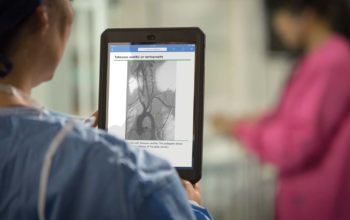
For most people suffering from heart failure in Canada, Dr. Heather Ross represents a source of hope for medical solutions. She assisted in the invention of tools that could solve the cardiovascular issues arising in Canada. Dr. Heather Ross heads the cardiology department at the Peter Munk Cardiac Center. She worked with the eHealth Innovation team from UHN to develop a digital tool, Medly.
Thanks to the Medly invention, patients can assess their heart rate, blood pressure, and weight. The results can then be sent back to a nurse who carefully keeps track of their health status.
Positive Feedback
Judy Nyman believes Medly has assisted improved the quality of life for her father. Medly app could receive a major boost with the incorporation of an AI (artificial intelligence) algorithm. It will surpass simple measurements and now hold predictive capabilities. Vector Institute is a non-profit research organization that supports this move. Vector Institute focuses on top edge machine learning.
The company has selected Medly to become a sequence in Pathfinder Projects. It is targeted to introduce artificial intelligence into medical practice. The Health Strategy and Partnerships Vice President, Alison Paprica, said that Vector Institute chose Medly due to the efforts demonstrated by the cardiovascular group at UHN and Dr. Heather Ross.
Further Scientific Research
Dr. Bo Wang is the lead researcher at Peter Munk Cardiac Centre. He is also a member of the CIFAR AI Chair initiative in Canada. Aside from that, he is a faculty member at Vector Institute. He was tasked with evaluating the mathematical aspects of data collected from over 98,000 patients.
His discovery would help change the course of the medical field. Dr. Bo Wang mentions that the new algorithm would offer more precise notifications. This would, in turn, lower the rate of false positives. Medly currently serves over 300 patients at zero cost for the patient. Dr. Heather Ross and Dr. Joe Cafazzo are aiming to do more. They want to scale technology and lower the dial from the current $3,000 to $1,000 per patient every year. This would cost a section of what is presently used to handle the disease.
University Health Network (UHN)
UHN is made up of the Toronto General, which was recently grouped among the top 10 hospitals worldwide. Other members of the University Health Network include the Michener Institute of Education, Toronto Rehabilitation organization, Toronto Western Hospital, and the Princess Margaret Cancer Centre. UHN has become a national and global source of patient care, education, and research. It handles extensive studies and complex medical cases.
It has the most comprehensive hospital-centric research initiative in Canada. UHN incorporated considerable research in rehabilitation medicine, transplantation, neurosciences, surgical progress, oncology, and genomic medicine. The research hospital has an affiliation with Toronto University.
Bottom Line
Vector Institute is a non-profit, independent firm committed to pushing forward machine learning and artificial intelligence techs. The vision of the company is to fuel leadership and excellence in Canada through AI to encourage economic growth and boost the lives of residents in Canada. The firm is supported by the Canadian government, the Province of Ontario, and other sponsors throughout the state.