
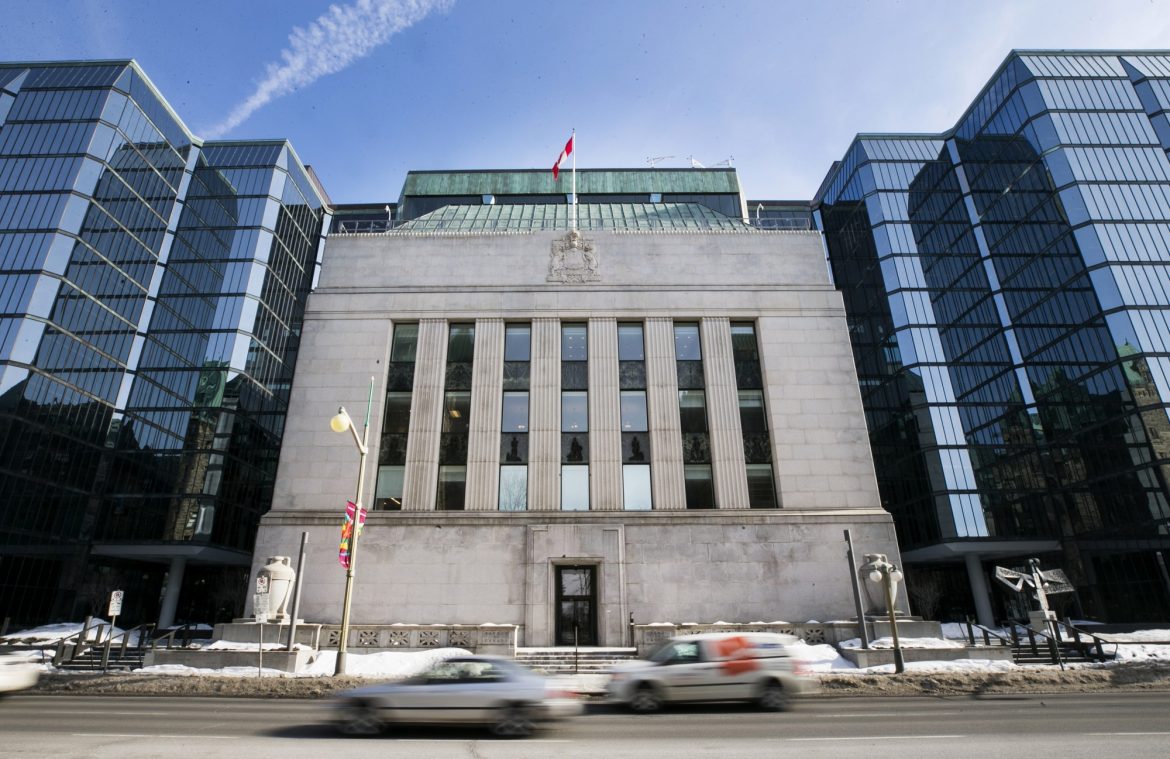
The Bank of Canada opposed pressure from investors to follow world peers in easing financial policy. In the recent decision, policymakers did not change interest rates for a seventh straight convention. The decision has surprised markets by assuming that the present stimulus levels are suitable despite the heightening trade matters between the U.S and China.
The Bank of Canada’s hesitance to flag a higher willingness to reduce interest rates has caused the central bank to become an outlier as partners across the globe ease policy. Analysts and investors had anticipated more hesitant language, making ready for some easing before the end of the year. The statement saw the Canadian dollar rising.
“This is more hawkish than we foresaw,” noted Brett House, Assistant Chief Economist at Nova Scotia Bank. Indeed, the way is open for expanded boost given the number of trade risks underlined by the national bank. Strategy creators additionally said Canadian development is probably going to slow in the next half of the year.
Investors are envisioning the Bank of Canada that, in the long run, will be compelled to join other national banks such as the Federal Reserve in minimizing rates, at least one month from now. But Wednesday’s announcement indicates the national bank stays hesitant on the issue. The financial institution rather chooses to hang tight for more solid indications of weakness before taking action.
“The Bank isn’t focusing on anything,” added Doug Porter, boss financial analyst at Bank of Montreal, said to investors.
The Canadian dollar increased by 0.8 percent to $1.3237 for every U.S. dollar at 12:14 p.m. Trades exchanging revealed investors are ultimately valuing in a cut by December, with solid chances of a second decrease this time next year. That is still less as compared to the four rate cuts valued by the Federal Reserve during the time.
Canada’s benchmark S&P/TSX pared a previous addition to 0.5 percent after the announcement. The market was viewed as “generally one of frustration,” as indicated by Candice Bangsund, portfolio chief at Fiera Capital.
The case for less expensive cash isn’t as convincing in Canada as it is somewhere else. A concrete run of monetary information bears the Bank of Canada chance to oppose – until this point, it has a tentative turn in global policy.
Rates in interests have likewise remained simulative in actual terms, even with Canada Bank on hold. On the other hand, mortgage rates have fallen dramatically over the last couple of months due to the decrease in world bond yields. Thus, according to the Bank of Canada development referenced in its statement, the stimulus is plenty in the network that the Bank of Canada should remember.
“In aggregate, Canada’s economy is working near potential, and inflation is on track. However, heightening trade conflicts and associated vulnerabilities are negatively affecting the world and Canadian economies,” the national bank noted in a statement. “In such a context, the present level of fiscal policy stimulus stays suitable.”
However, escalating strains between the U.S. and China are difficult to ignore. The exchange war affects global financial momentum more than it did in July, and spearheading lower commodity costs, noted the Bank of Canada. Thus, officials will need to have a close focus on world developments and their effects on the standpoint for Canadian development and inflation.