Canada is a rural nation with 30% of its population living miles away from major cities. It is also the fifth largest exporter of global agricultural products, with over 2 million workers in the farming field.
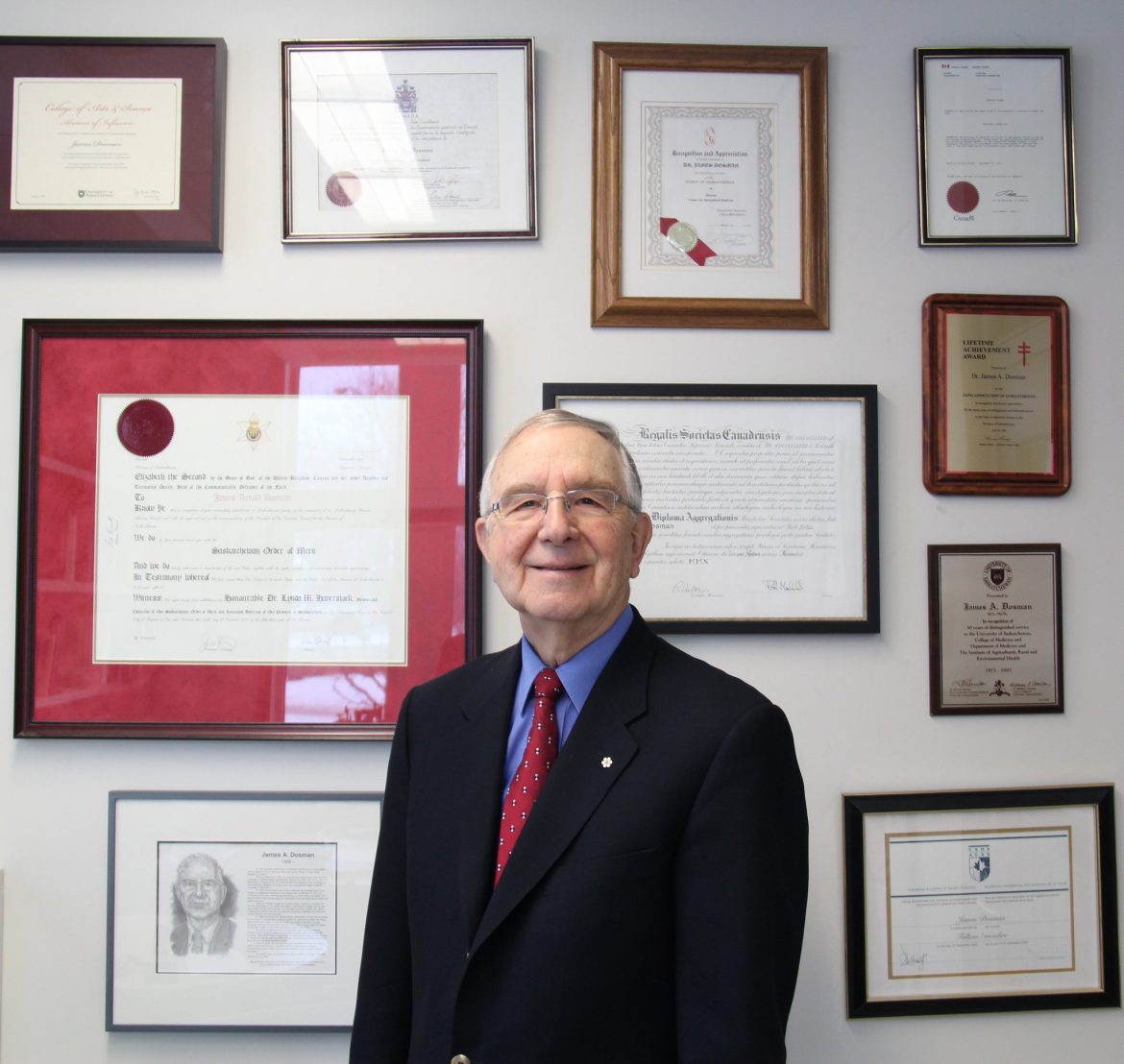
Dr. Dosman A. James was born in Humboldt Saskatchewan in 1938. He is the founder of the Canadian Centre for Health and Safety in Agriculture (CCHSA). He has dedicated his career to protecting and improving the health of agricultural workers in Canada and globally.
These farmers who are devoted to plant and harvest produce are often exposed to dangerous working conditions and face considerable health risks, unlike people living in modernized town centers. Selfless acts such as this have earned Dr. Dosman a name as “the father of agricultural medicine in Canada.”
A brief history of James Dosman
Born in the rural parts of Saskatchewan, James Dosman grew up experiencing farming challenges first hand. As a trained specialist in respiratory medicine and a physician, he had an early encounter with dust exposure among farmers and workers in grain fields. He schooled in Annaheim and attended St. Peters College in Muenster before proceeding to the University of Saskatchewan for his medical degree in 1963. His hard work has been covered in seven books and 256 publications. His initial works are the brainstorm behind the Grain Dust Medical Surveillance program aimed at shielding Canadian farmers from the effects of harsh grain elevators.
Dosman’s establishments that revolutionized agricultural health
Dr. Dosman was a family doctor in Saskatoon before joining McGill University in Montreal, where he specialized in Respiratory medicine. In 1986, he became the founding member of the Centre for Agricultural Medicine and the director for Health and Safety in Agriculture at the Canadian Centre in 2006. In 2011, Dr. Dosman launched the National Agricultural Industrial Hygiene Laboratory (NAIHL). All his establishments and flagship programs were founded at the University of Saskatchewan before branching out to other parts of the country.
He is also the chairperson for Agricultural Safety and Rural Health, a Canadian coalition that transitioned to the Canadian Agricultural Safety Association (CASA). This is the brainchild behind the establishment of the CASA program that is aided by Agri-Food Canada.
Dr. Dosman assisted in launching a nationwide database supporting training and research that was later adopted by the Occupational Safety and Health Administration (OSHA) based in America.
Dr. Dosman later developed the Centre for Agricultural Medicine at the University of Saskatchewan into the Health and Safety in Agriculture for Canadian farmers (CCHSA). The facility is the only diverse center for teaching, research, prevention, and matters relating to agriculture and rural communities. Alongside rural municipalities and local governments, Dr. Dosman formed a network called the Agricultural Health and Safety community, bridging the gap between rural families with efficient healthcare and serving the community.
His dedication to improving the safety and health of rural Canadian farmers improved healthcare in other parts of the world as well. This improvement finally helped the CASA organization secure ongoing funding from the Canadian Agricultural Safety program.
He also spearheaded various international symposiums such as Public Health and the Agricultural Rural Ecosystem held in Saskatoon, Canada.
As a result of his hard work, Dr. Dosman orchestrated the design of Safety and Health in Agriculture, an international code in Geneva 2011. Due to this international code in health, the organization has been able to provide quality healthcare standards to millions of agricultural workers and farmers worldwide.